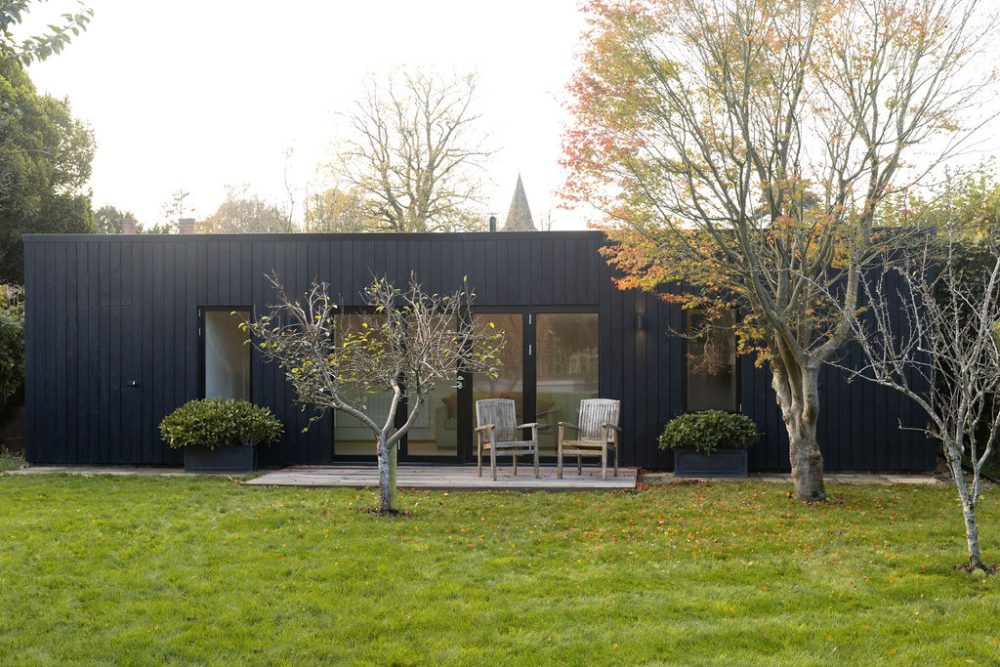
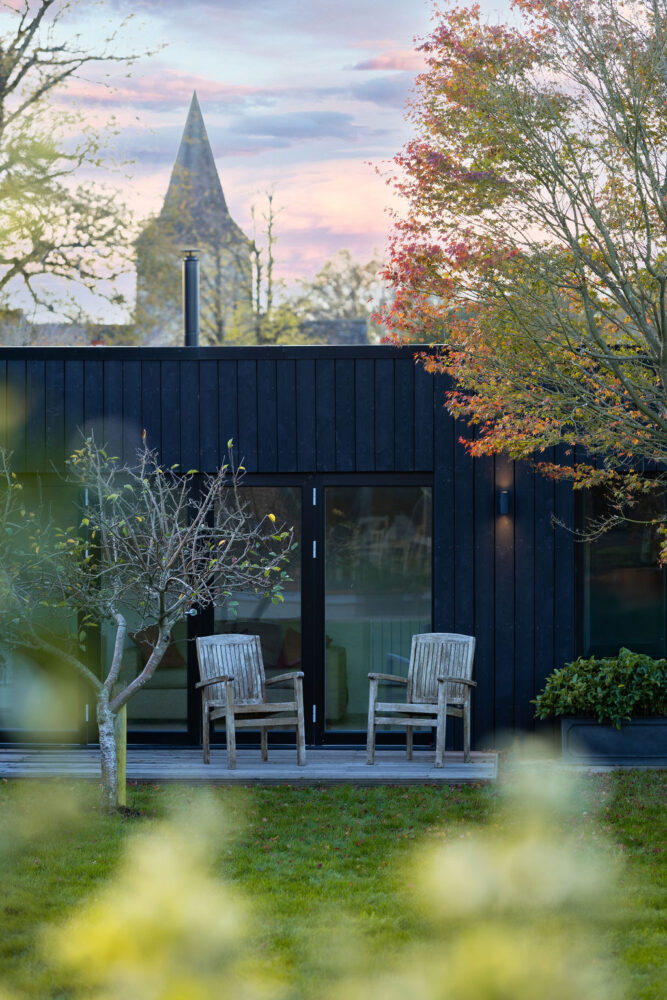
An elegant garden room nestled amongst the trees forms the new backdrop of our client’s Surrey garden.
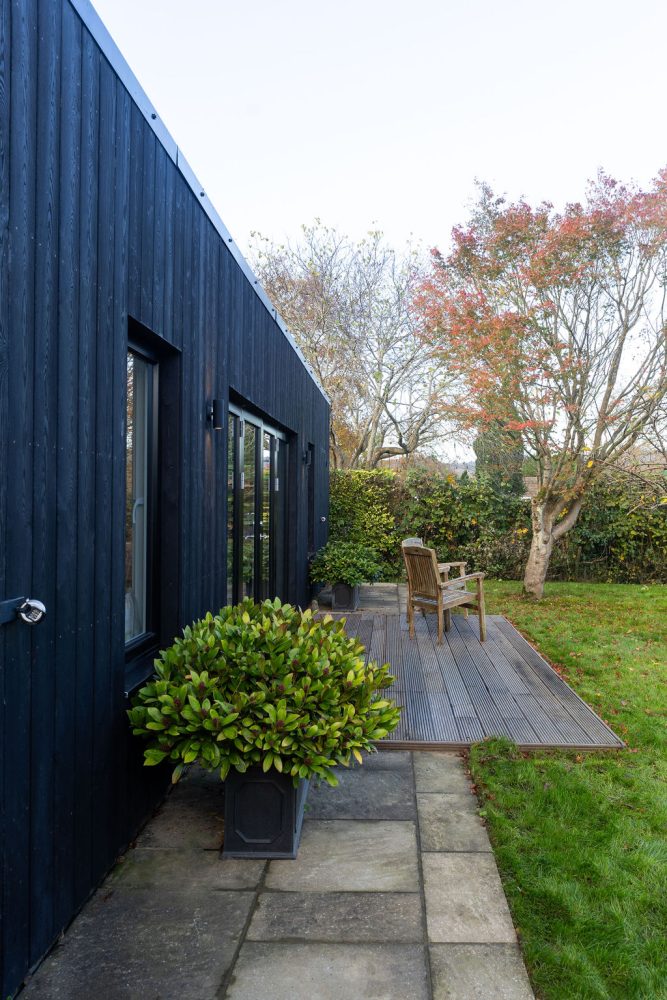
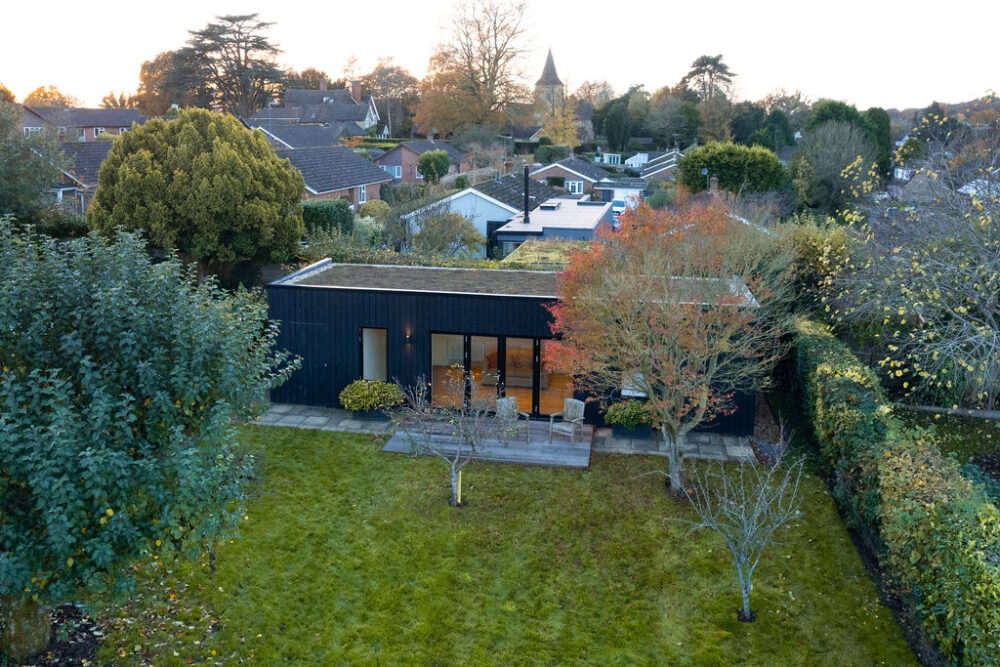
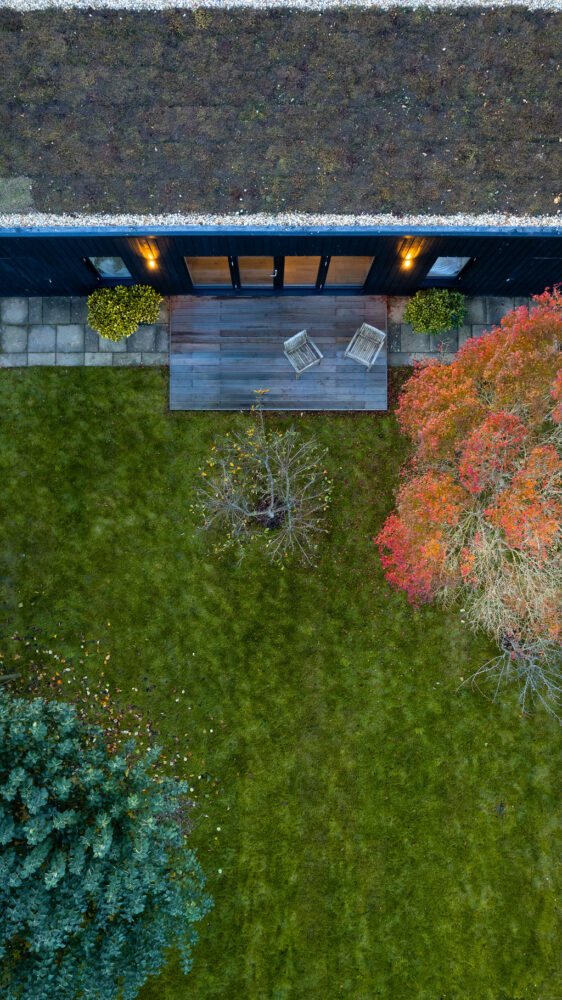
Our clients, Ed and Netty, wanted a multi-purpose space tucked away at the end of the garden, an area for themselves and their teenage children to relax, exercise and generally use as an extension to the home. Clad in charred timber it forms a backdrop to the garden. Low impact on both sustainability and visual fronts, the structure boasts a highly insulated timber frame and green sedum roof.
A Multi-Purpose Sanctuary
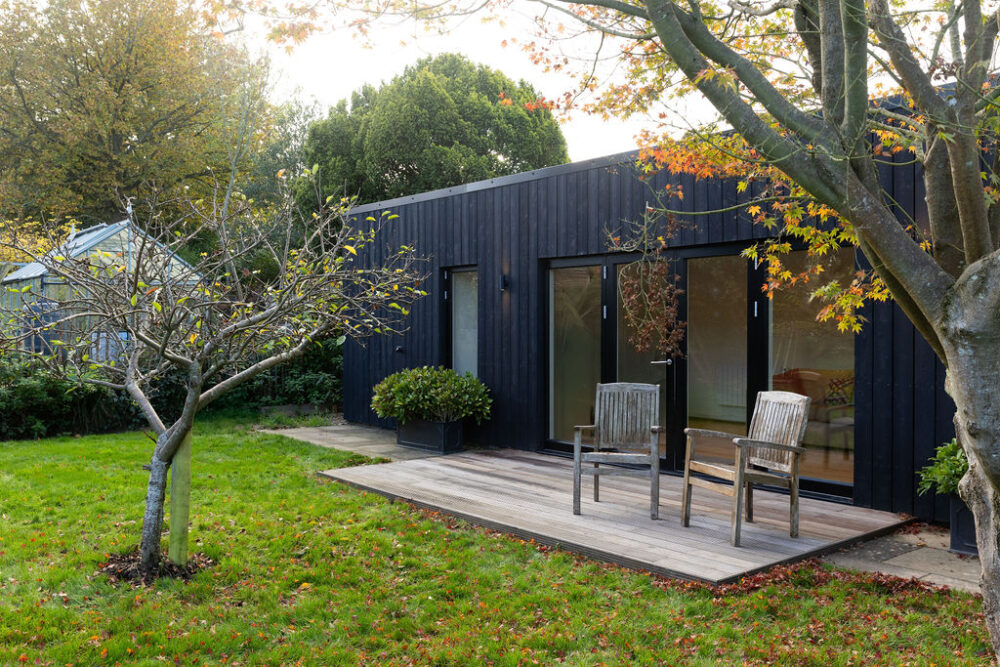
The large windows and bifold doors provide uninterrupted views of the garden, allowing natural light to flood the space throughout the day. This garden room adapts effortlessly to each function, offering a flexible environment for relaxation, movement, and focus. Whether used for study sessions, time with friends, creative pursuits, or high-energy workouts, this structure serves as an essential extension of home life—just a few steps away.
Materiality in Harmony with Place
The design draws from a rich, natural palette, ensuring the garden room sits comfortably within its setting. The charred timber has a deep, textured finish that complements the warm reds of the clay tiles and bricks of the main house. This material not only enhances the aesthetic but also offers durability and resilience over time.
Enhancing Biodiversity
Embodying a flat sedum roof, the form maximises on space whilst remaining low impact within the garden landscape and respectful to neighbouring sightlines Over time, the soft textures and shifting colours of the planting evolve with the seasons, ensuring the structure always feels in tune with its surroundings. From the upper windows of the house, this green canopy becomes an extension of the garden itself. It creates a vital habitat for pollinators, insects, and birdlife, enriching the garden’s natural ecosystem.
The sedum roof also helps manage rainwater, reducing runoff and easing pressure on drainage systems while improving air quality by filtering pollutants and capturing carbon. As a low-maintenance, self-sustaining feature, it requires little intervention while continuing to provide long-term environmental benefits.