Great architecture goes beyond appearances, creating homes built for the future.
Beautiful buildings are only part of the story. We explore how thoughtful design, considered material choices and carefully integrated technology can create homes that perform beautifully for years to come.
We take great, personal joy in our projects when, after months of dedicated thought, vibrant discussions, and tested iterations, we can stand back and look at a fully finished building that can finally be classed as complete. Taking a snapshot in time and admiring something beautiful is only one element, however.
How is the building going to perform?
Embedded in all of our projects is years’ worth of skill, knowledge, experience and behaviour gained to develop a building that will be efficient, sustainable, and resilient. No one can predict the future. But we can – and do – look at evidence and plan ahead. A growing climate crisis and energy uncertainty is impossible to ignore. Whether your priority is environmental resilience and stability, you get excited about the science of innovative technologies, or you want to ensure that the money that you are investing in your project is wisely put to use for the long term benefit of your energy bills, there are plenty of low-carbon and energy efficient technologies and techniques that can help elevate your build beyond the beauty of a day one photograph.
Analysing the intent
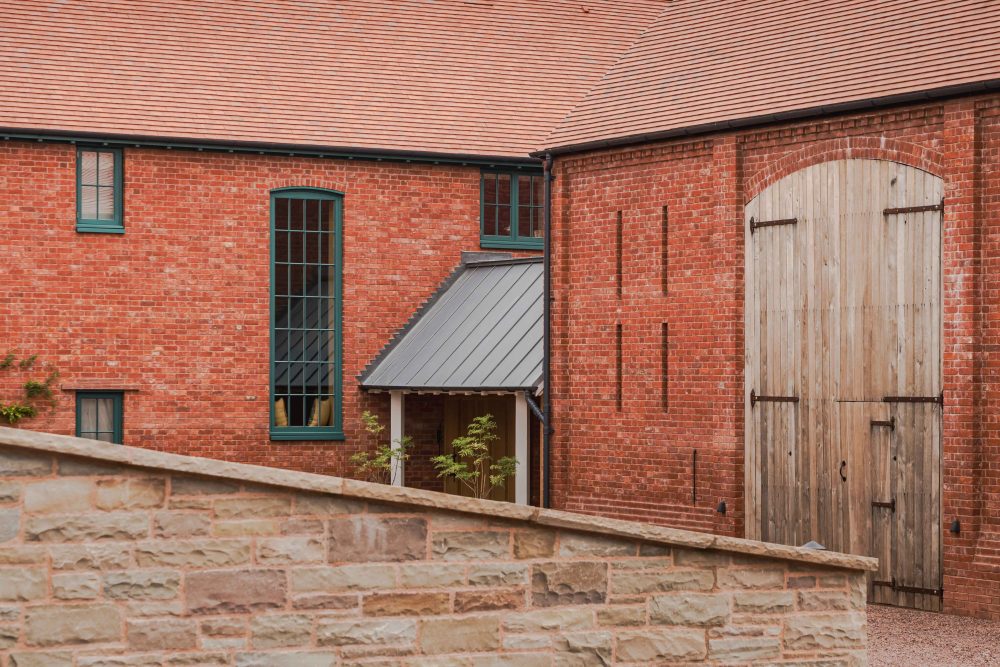
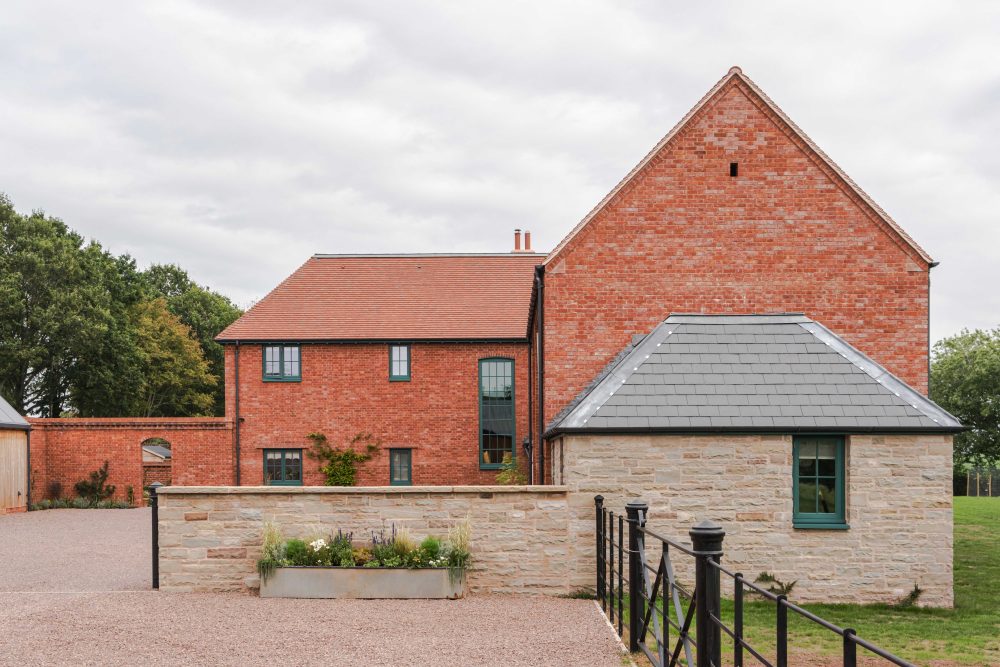
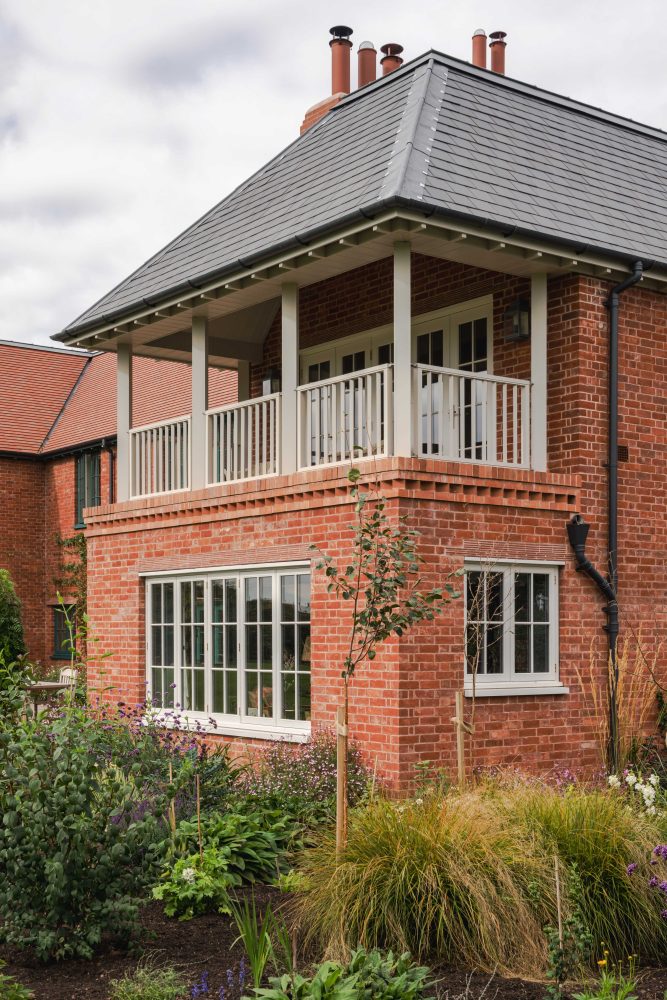
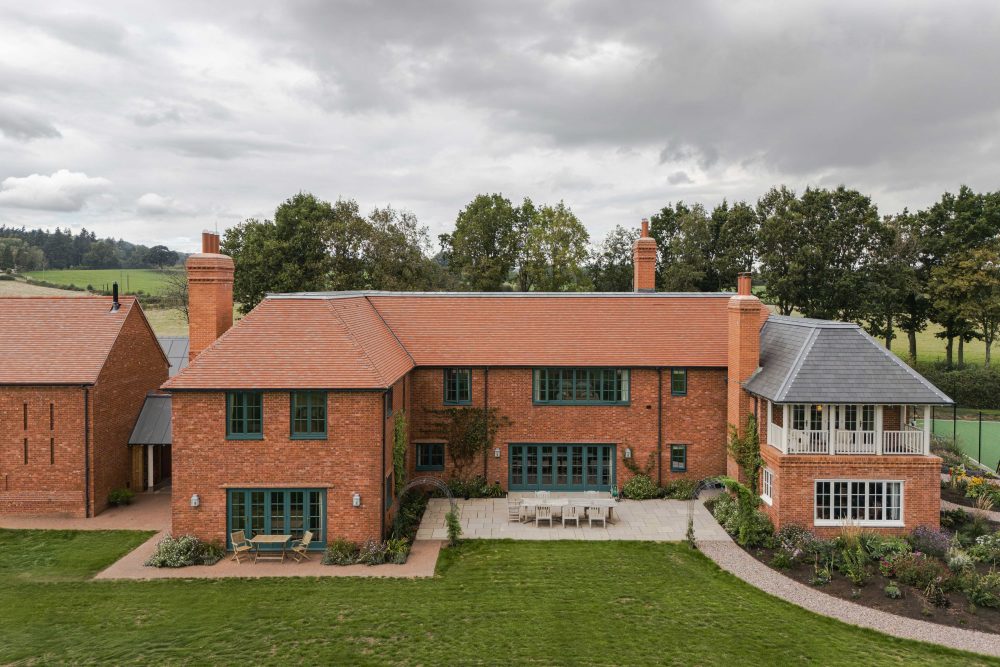
Behind every successful building is a series of questions and priorities that have to be established head on. When key questions are asked early in a project’s process, more options can be evaluated and, ultimately, integrated within a project’s core identity instead of being shoehorned in after the event. In our Herefordshire Farmhouse project, for example, a key desire in the new home project was to use as little carbon-intensive concrete as possible. Our team took that approach to heart and, keeping a beautifully traditional and rural vernacular, used an interlocking clay block structure behind the brick to drastically reduce the volume of concrete used across the sizeable family home. Whereas the thermal comfort and air quality in our Vicarage Hill project was front and centre of the refurbishment, so a continuous external wall insulation (EWI) and internal air tightness membrane were used alongside a robust MVHR system to substantially improve the home for our clients to grow old comfortably in.
Integration, not just addition
These examples are just two of many where we have spoken to our clients, analysed the intention from the outset, and integrated appropriate solutions into their projects. Sure, you can usually add solar panels to your roof (subject to Planning Permission, structural check etc.), but there is a boom of technologies and techniques out there that work better when factored into the design early. If you ask him, Russell, our in- house Fellow of Architectural Technology (FCIAT), will excitedly tell you about his own air source heat pump, solar panels and battery that he had installed in his own 1980s terraced house.
Cut through the noise and ask the right questions
You might have spoken to someone who claims their air source heat pump doesn’t get warm enough. You might have read that someone has had Planning Permission refused for their A-rated EPC, Passivhaus eco-home. You might be worried that running a fully electric home without a gas supply can be costly. You might question whether, as a result of those comments, these hurdles might apply to you. Luckily, we have genuine experiences and have carried out our own research in these areas so that we can incorporate appropriate methods that would be right for your project. You might find us asking questions that are specific to your area such as: how do we respond to the water scarcity of the South East of England? Alternatively, do we need to think about protection from flooding, coastal erosion, or corrosion from the salty sea air? Or how do we heat a home that is far away from a main road? There is not a one-size fits all approach to every building in the country. It would be a dull world if there were. There is, however, our team of knowledgeable and sensible architects, chartered architectural technologists, and architectural designers – supported even more by our network of consulting specialists – to help guide your discussions forward in the way that works for you.