Read our feature in Good Homes Magazine
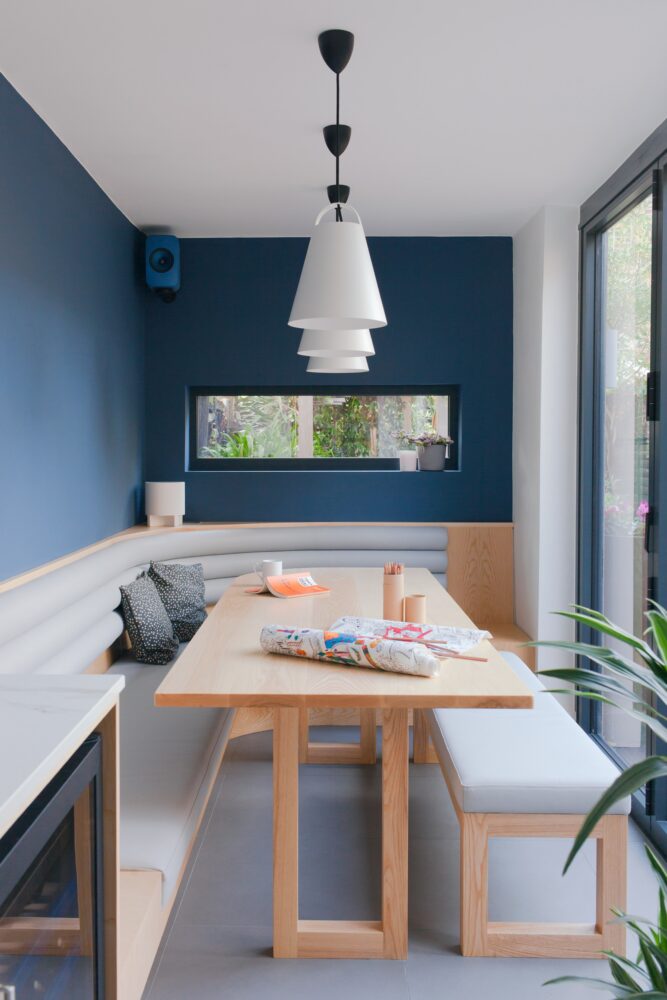
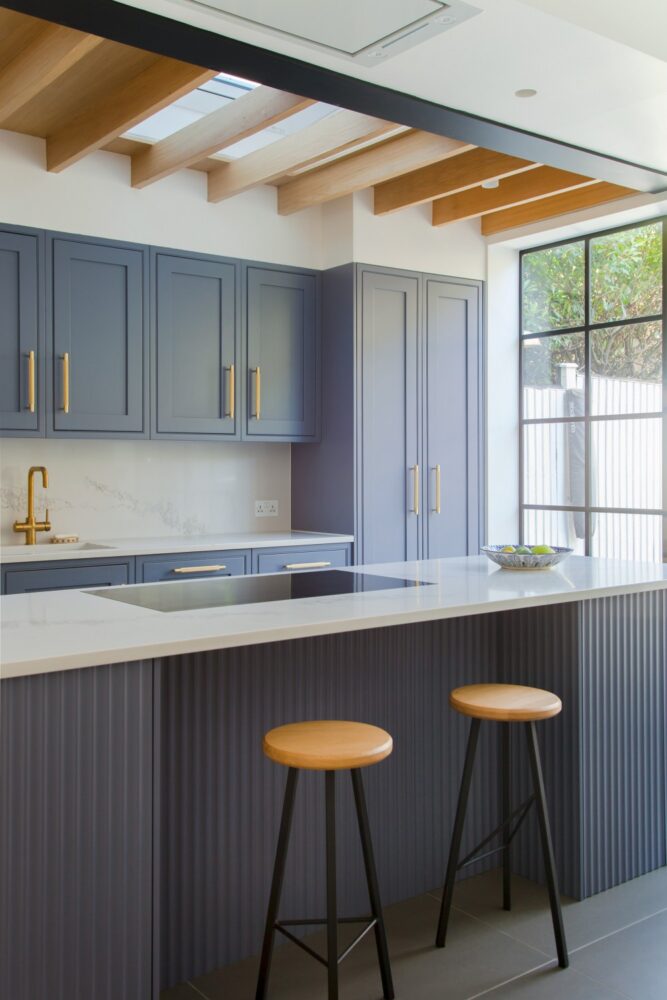
We were thrilled to have Good Homes magazine feature our Alloway Road project in their October 2021 edition. They interviewed our client about the scheme, and transforming their kitchen-diner with a stylish bespoke booth area and bi-fold doors.
Q: What inspired the new style of space?
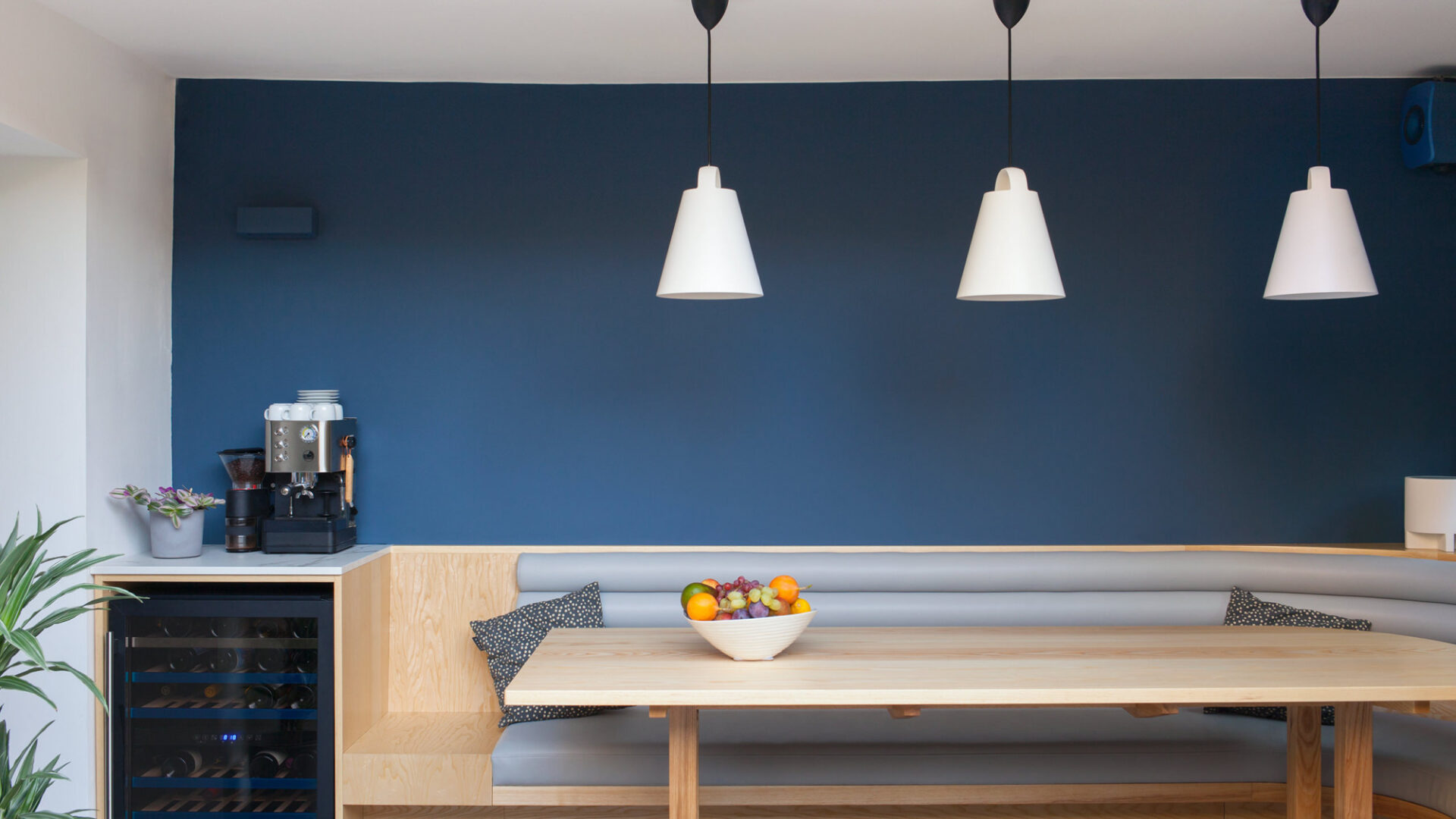
We’d been living in the house for eight years, but with two growing boys our existing kitchen-diner wasn’t working for us as a family or to our taste. We also had to walk through the old utility to reach a downstairs shower room, which was only used as storage for the boys’ scooters and footballs. It was while in the bath reading a magazine one evening that a picture of a dining table with booth seating caught my attention, and made me wonder whether we could find space for something similar.
Q: How did the design evolve?
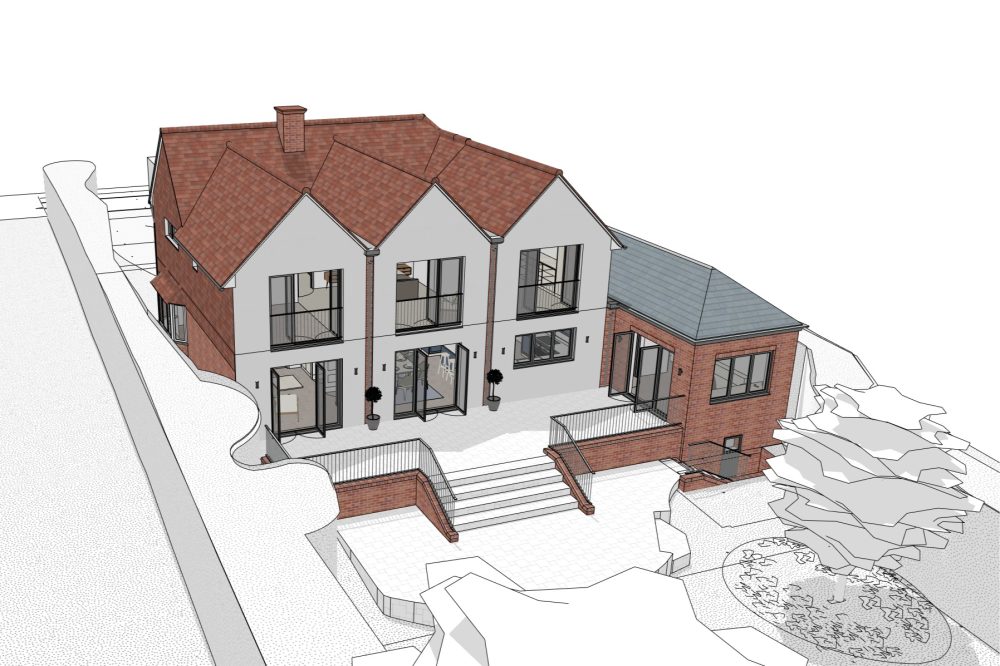
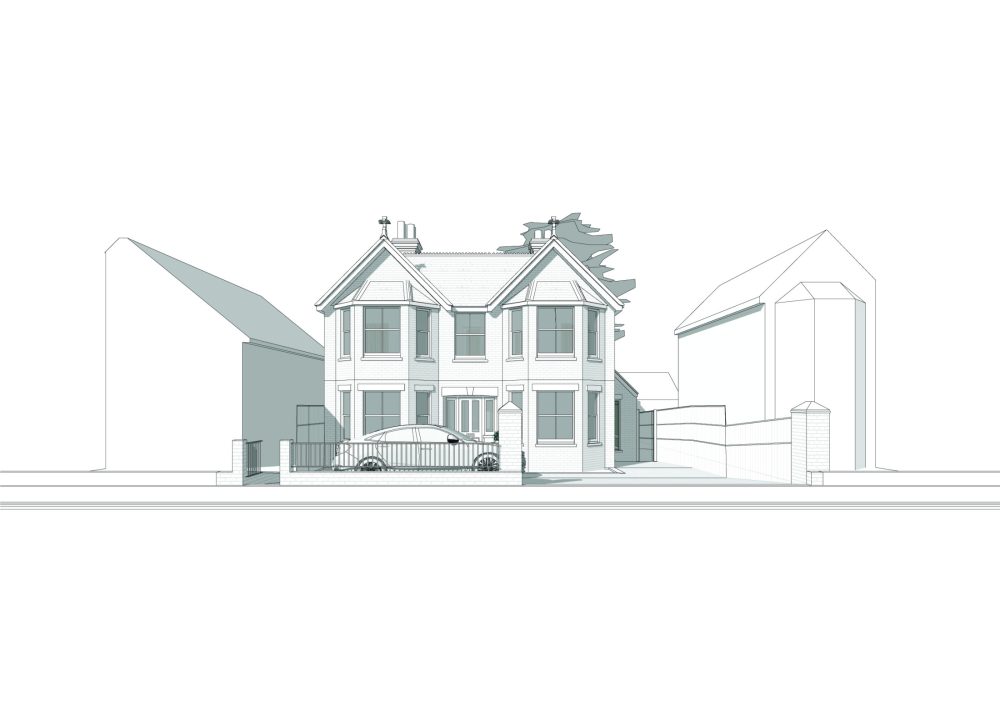
We worked with George & James Architects to fill the kitchen and dining area with light and connect the rooms to the garden. They designed a new corner window above the sink where our back door used to be, and as we living in a Conservation Area applied for planning permission for the dining space, which has bi-fold doors out onto new decking.
Q: How was the booth created?
We’d originally planned to clad the dining area in aluminium, but our budget just wouldn’t stretch, so our builders used grey coloured render for the exterior instead, taking down walls and rebuilding the ceilings. Tiles have been laid in the booth over underfloor heating with the same flooring running through into the kitchen for a seamless feel.
We worked with a carpenter and upholsterer to design the oiled white-ash table and seating, including a dining bench, and were advised that leather-look material – often found on yachts – would be hardwearing and waterproof.
Read the full article: Good Homes, October 2021
Sustainability and Performance Still Matter
Building projects in historic settings are still building projects and therefore warrant consideration of the environment. Whether upgrading an existing structure or proposing a new building, we can’t ignore our responsibility to incorporate sustainable principles that are sympathetic to conservation requirements.
Insulation, air tightness, low-carbon technologies, air source heat pumps are all on the table in Conservation Areas. Integrating them into sympathetic designs is where the real fun comes into play.
Documentation and Detail Are Your Allies
Planning submissions in Conservation Areas are held to a higher standard. We will prepare written statements to explain, justify and support our well thought out designs. This is likely to be in the form of detailed heritage impact assessments, and Design and Access Statements grounded in contextual analysis.
Getting this right not only supports the planning process but demonstrates respect for the area’s significance.
Crafting the Future with Care
At George & James Architects, we believe that working in a Conservation Area is a responsibility that demands skill, empathy and rigour. But we also see it as an exciting design challenge: the chance to create something that both honours the past and contributes to the future.
Whether you are restoring a period home, designing a discreet extension, or introducing a new building into a historic setting, we are here to guide you with expertise and imagination.